
Your first apply in the terminal
Run a complete patch job in the terminal with the same tiny homebrew ROMs the webapp uses, then practice creating a patch and packaging it as a shareable bundle. Nothing here needs a real ROM; every asset is downloadable and safe.
Install first if you have not: Install the CLI.
You need an internet connection to download the practice files. Sample asset generation documents how a development checkout supplies the same files.
First apply
Follow these steps in a new working directory. The archive contains the ROM, two patches, and the expected result checksums.
- Download
first-weave.zip. - Apply its bundled recipe.
- Calculate the output SHA-256 with
checksum.
curl --fail --location --output first-weave.zip https://rom-weaver.com/first-weave.zip
rom-weaver patch apply --input first-weave.zip --output rom-weaver.nes
rom-weaver checksum --input rom-weaver.nes --algo sha256
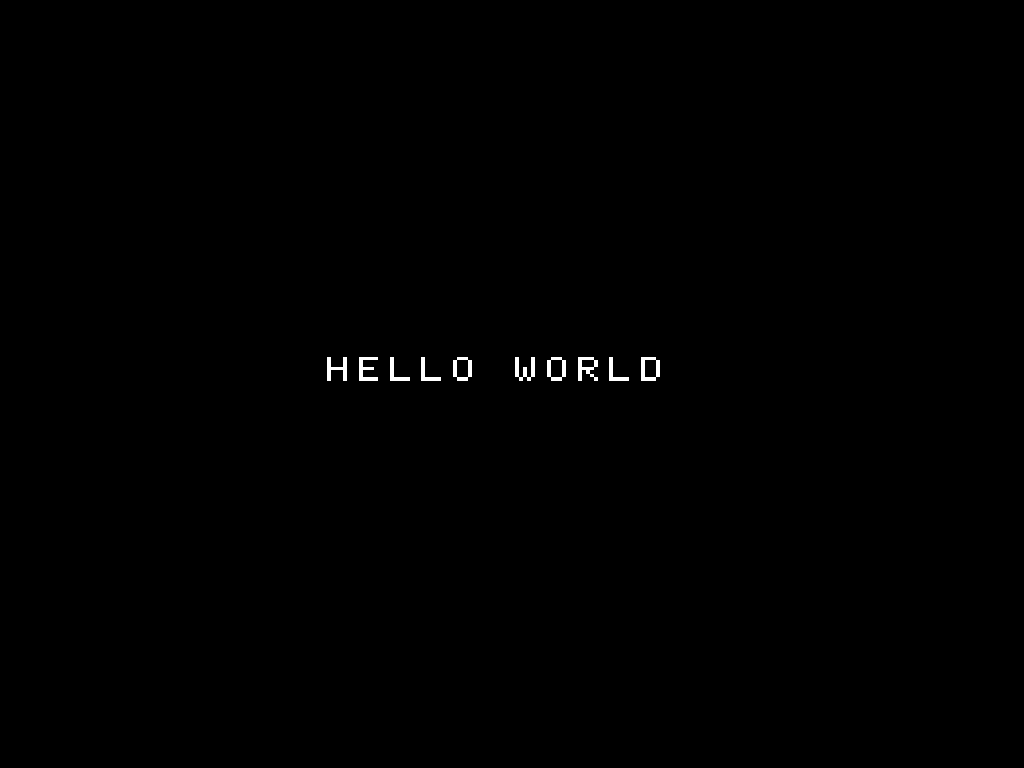
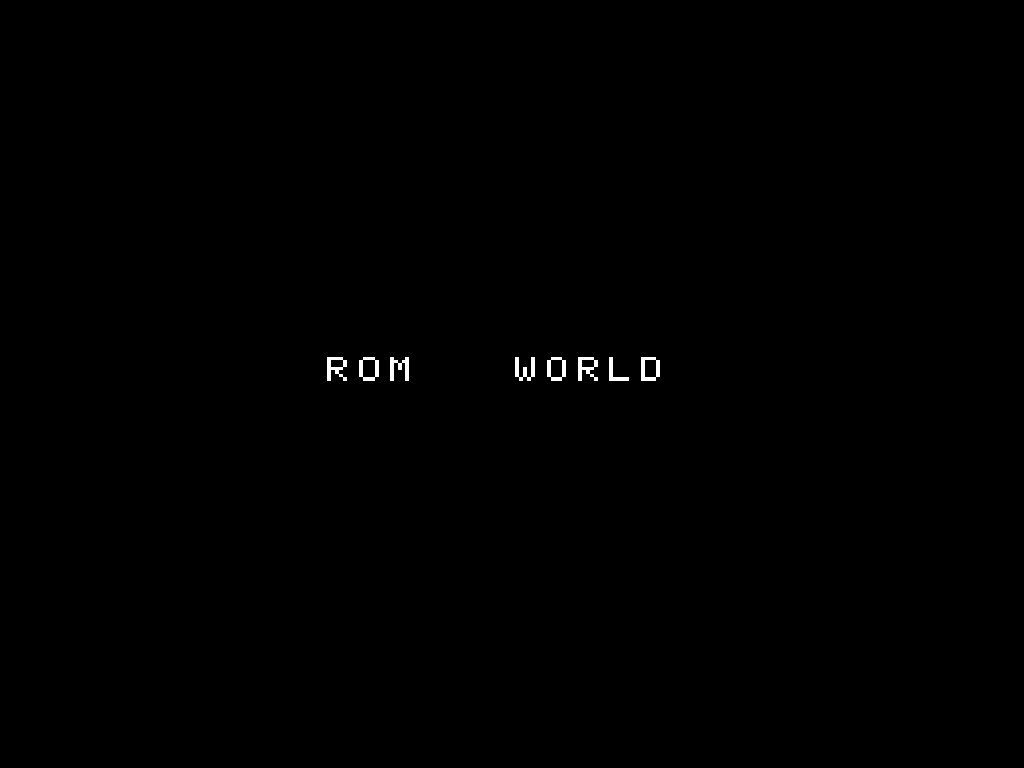
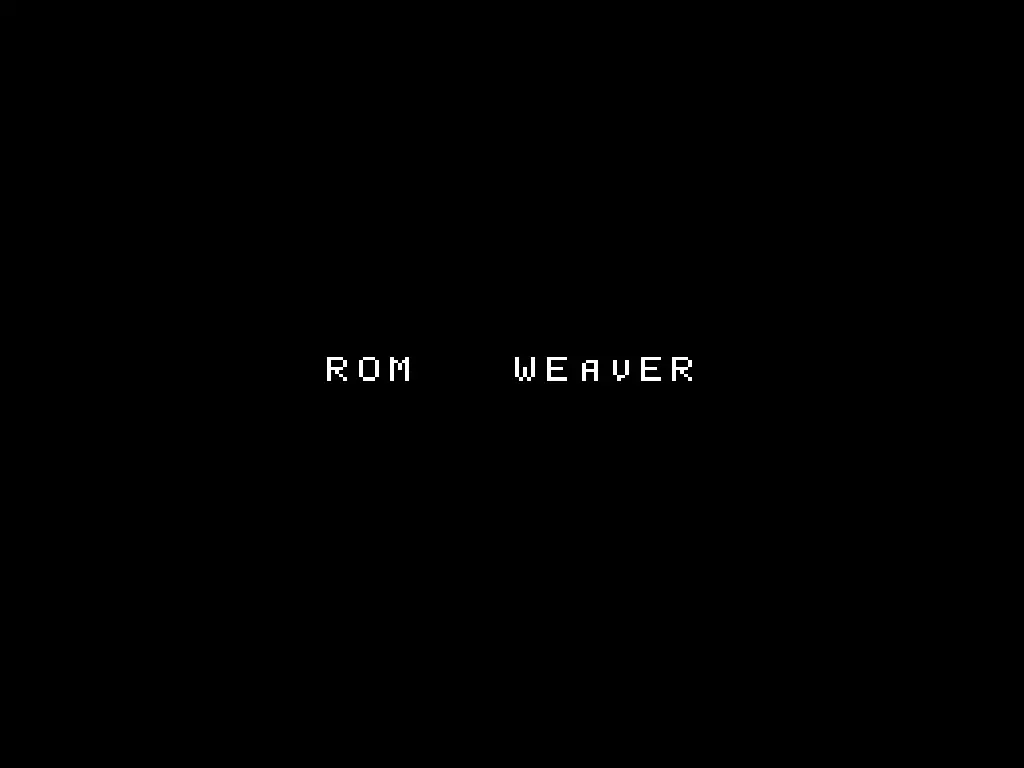
The original ROM displays HELLO WORLD. One IPS patch changes HELLO to ROM, and the other changes WORLD to WEAVER. Both patches target the original ROM, so either order works. The final ROM displays ROM WEAVER. The final SHA-256 should be 7ac8001dcbcbff45cd5cebb5b0655192021fbbdf27533aa961347194ab3e836e. Open the result in an NES emulator to run it.
| Original ROM | After the first patch | After both patches |
|---|---|---|
 |
 |
 |
Practice patch creation and bundles
Use the two loose homebrew ROMs from guided Create. The first is the clean Original. The second is Modified:
curl --fail --location --output hello-world.nes \
  https://rom-weaver.com/hello-world.nes
curl --fail --location --output modified-world.nes \
  https://rom-weaver.com/modified-world.nes
Create a BPS patch, apply the created patch to the clean Original, and checksum the rebuilt file:
rom-weaver patch create \
  --original hello-world.nes \
  --modified modified-world.nes \
  --output sample.bps
rom-weaver patch apply \
  --input hello-world.nes \
  --patch sample.bps \
  --output rebuilt.nes
rom-weaver checksum --input rebuilt.nes --algo sha256
The final SHA-256 should be 00639b0b8586e10c67d6d15217478786cebed6e2cd6495ed94b6a338c0de0afd. That match proves the patch rebuilt Modified byte for byte.
Now package that tested patch as a public-safe bundle. --no-bundle-rom keeps the Original out of the ZIP while recording its checksums:
rom-weaver bundle create \
  --input hello-world.nes \
  --patch sample.bps \
  --patch-id sample \
  --patch-name "HELLO to MODIFIED" \
  --expect-out sha256=00639b0b8586e10c67d6d15217478786cebed6e2cd6495ed94b6a338c0de0afd \
  --output rom-weaver-bundle.json \
  --bundle sample-bundle.zip \
  --no-bundle-rom
Test the finished archive from the same clean Original:
rom-weaver patch apply \
  --input hello-world.nes \
  --bundle sample-bundle.zip \
  --output bundle-rebuilt.nes \
  --no-compress
rom-weaver checksum --input bundle-rebuilt.nes --algo sha256
The result should have the same SHA-256 as rebuilt.nes:
00639b0b8586e10c67d6d15217478786cebed6e2cd6495ed94b6a338c0de0afd
This sequence uses the same generated assets as the browser tours, so both interfaces start from identical bytes.
What you learned
You applied a patch chain, created and tested a patch of your own, and packaged it as a bundle - the three jobs the CLI exists for. A real release differs only in which files you point at.
Next
- Apply patches from the CLI: patch order, headers, byte order, checksum checks, and validation.
- Create patches from the CLI: build and test a patch for release.
- Bundles from the CLI: package patches into a repeatable, verifiable recipe.
- CLI reference: the command map, global behavior, and output formats.
- How patching works: what these checksums actually prove.